Project Grasshopper
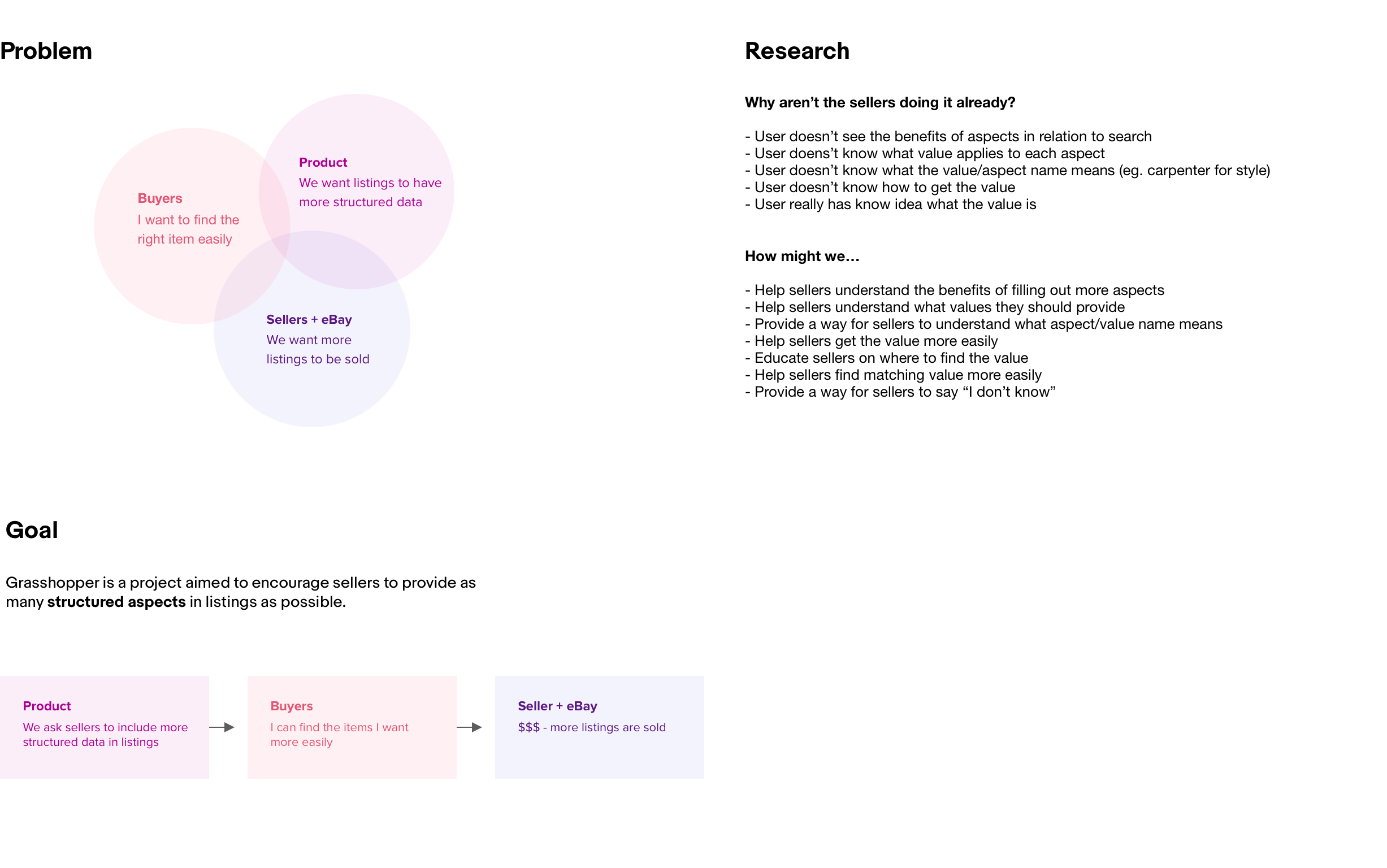
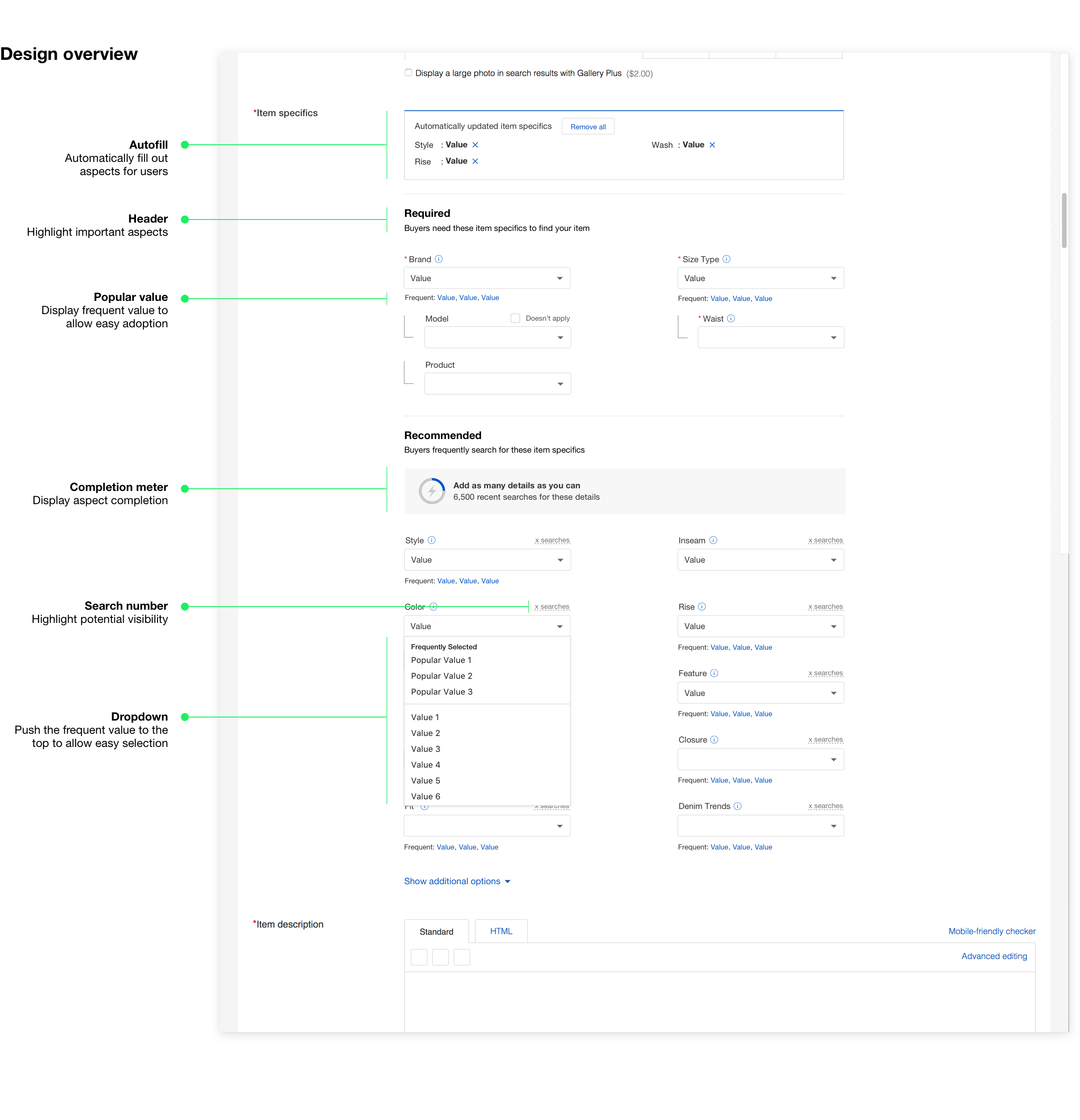
The goal of Project Grasshopper is to encourage the eBay sellers to provide as much structured data (eg. brand, size) as possible in their listings. By having access to these data, eBay will be able to provide more targeted recommendations for sellers and tailored browsing experience for buyers.
As I was brought into the project, I realized that the Product team has put together a few proposals on how we could potentially resolve this issue. However, as a designer I proposed to take a step back and investigate why sellers are not providing as much data currently. To answer that question, we ran a survey with 1,200 sellers and conducted interviews with 5 sellers. The results indicated that the most common challenges ranges from “obscure aspect” to “long tail aspect”.
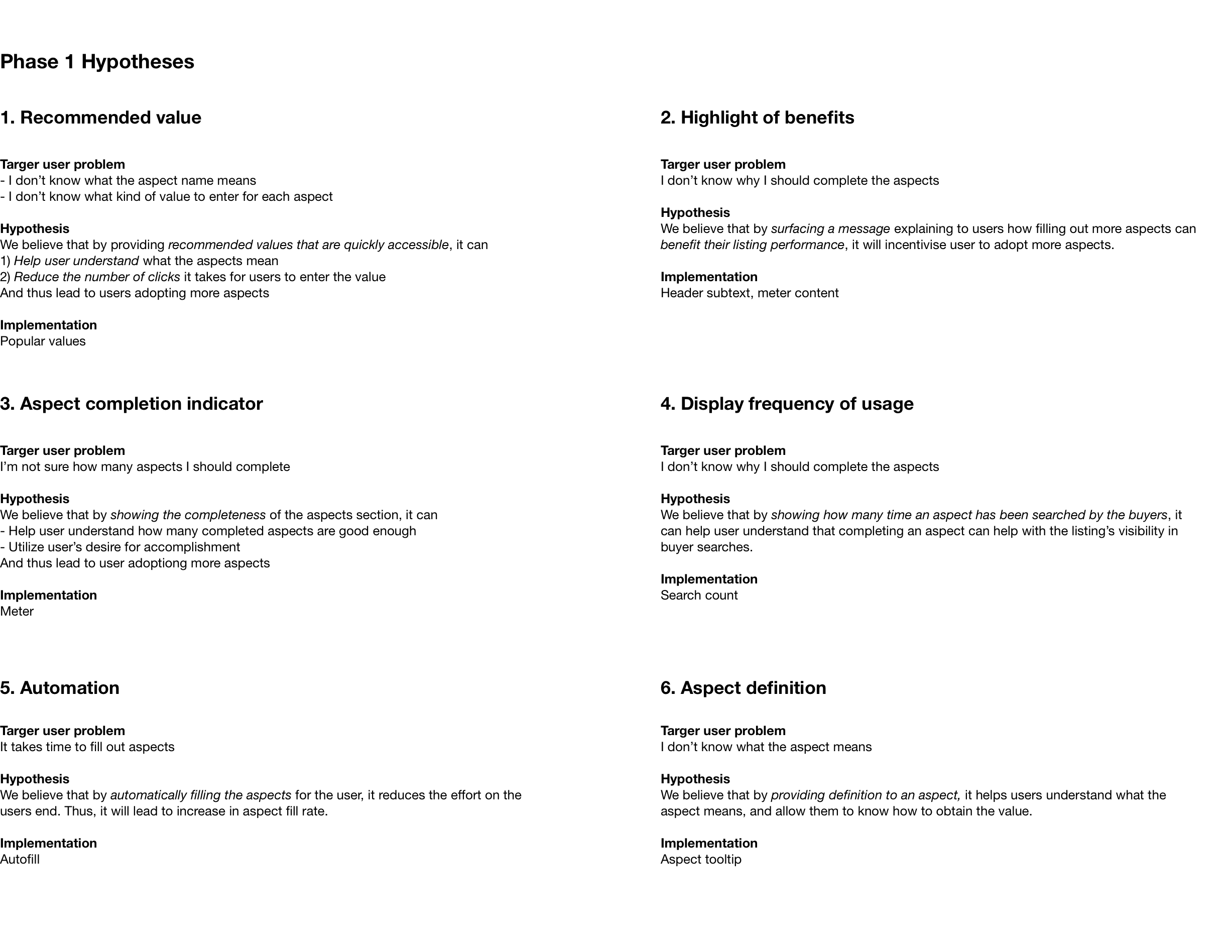
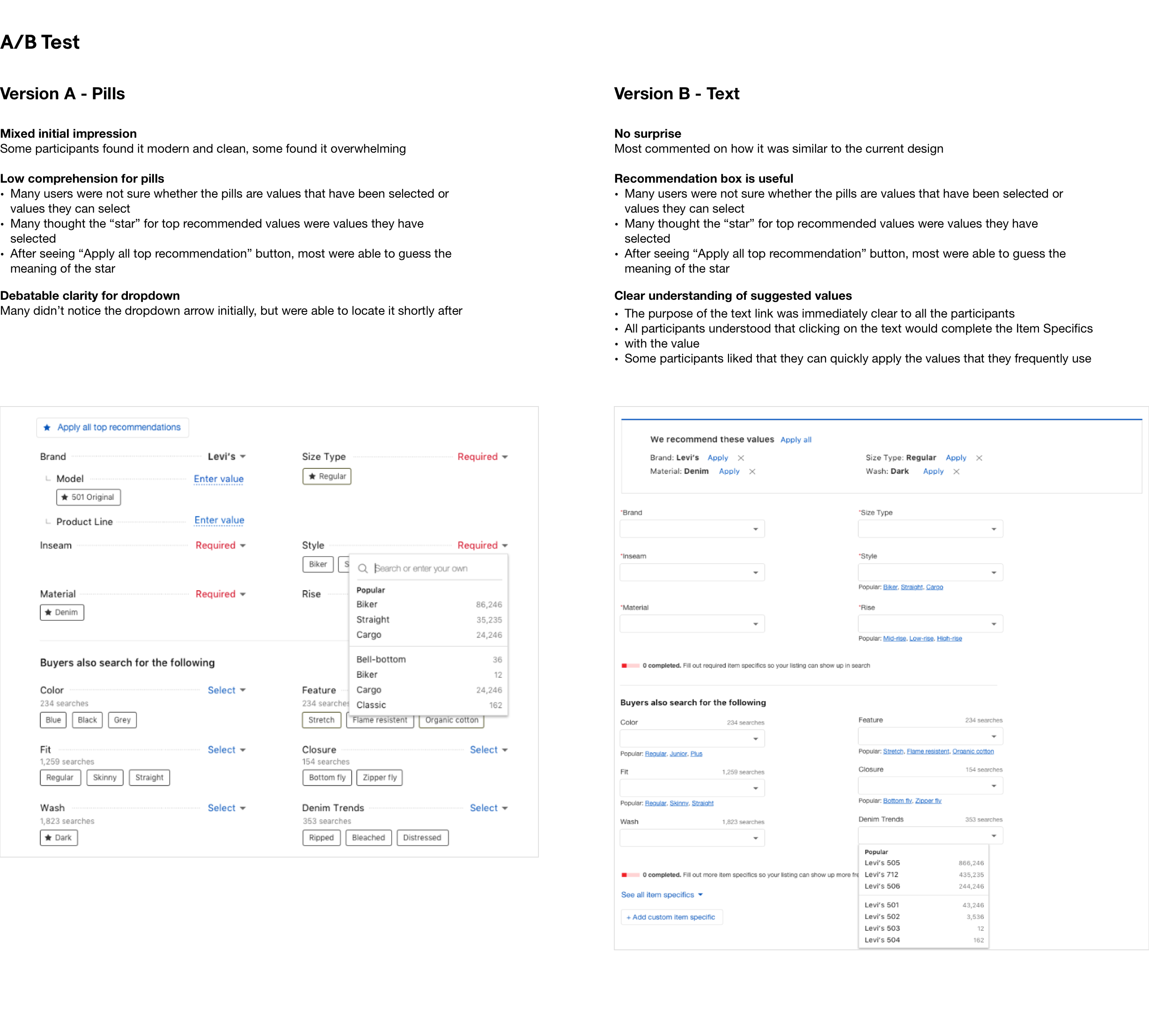
Based on the findings, the team laid out 6 hypotheses on how to improve the experience. I created different variations of the design accordingly. Eventually, these designs were narrowed down to 2 variations of the designs, each has its strong proponents. A A/B test and survey was put in place to help us make a decision, and a more traditional design stood out.
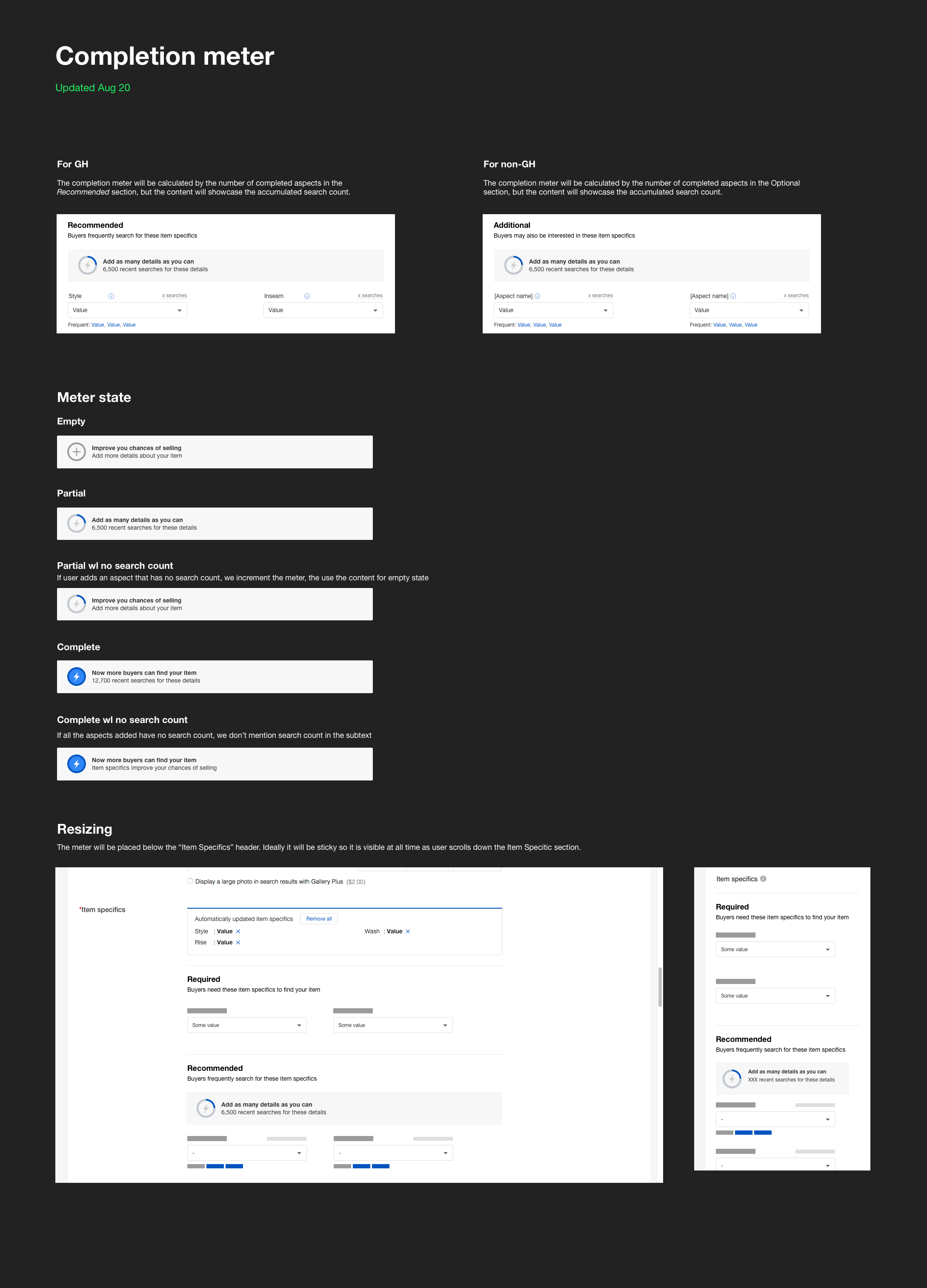
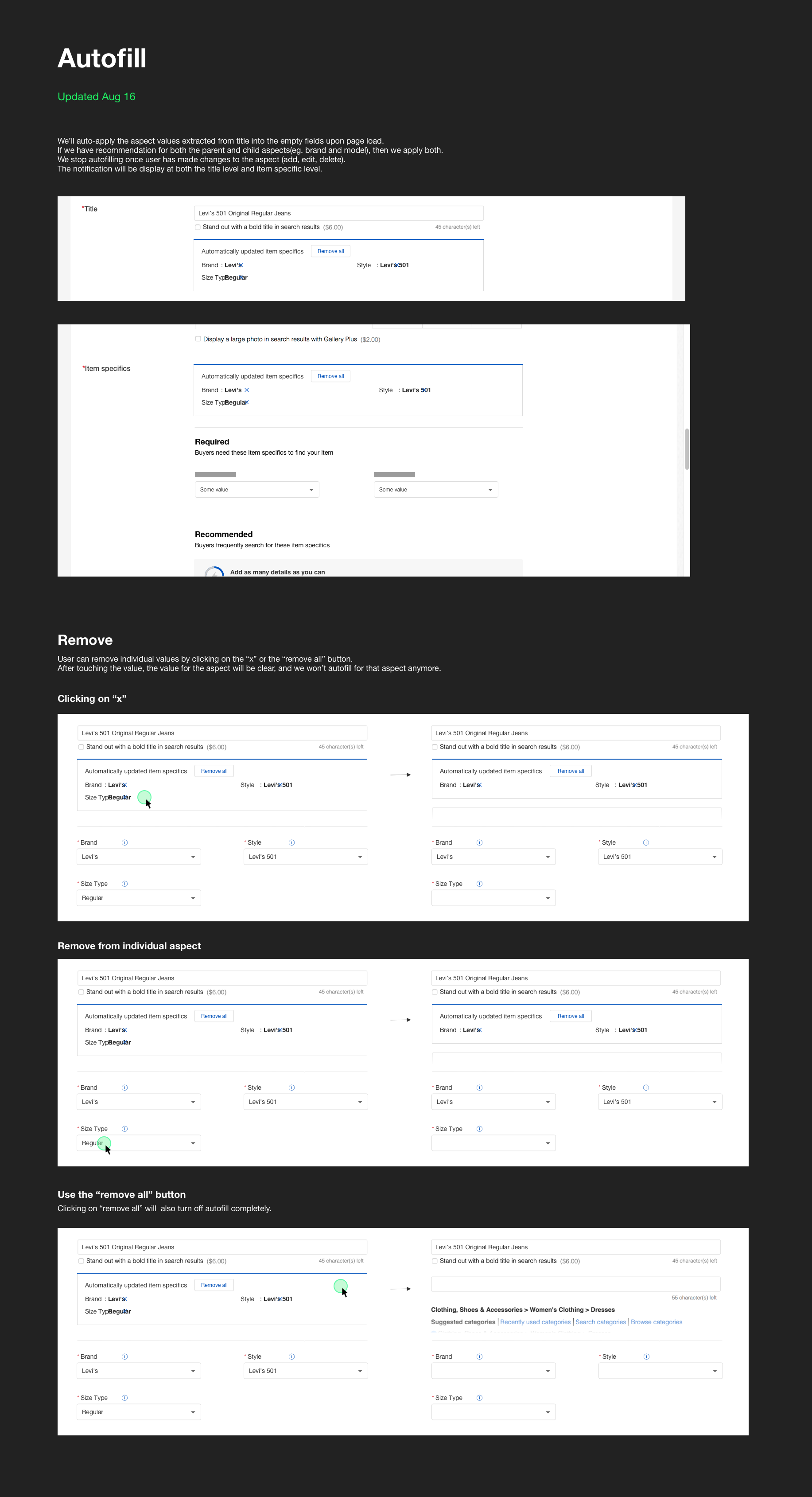
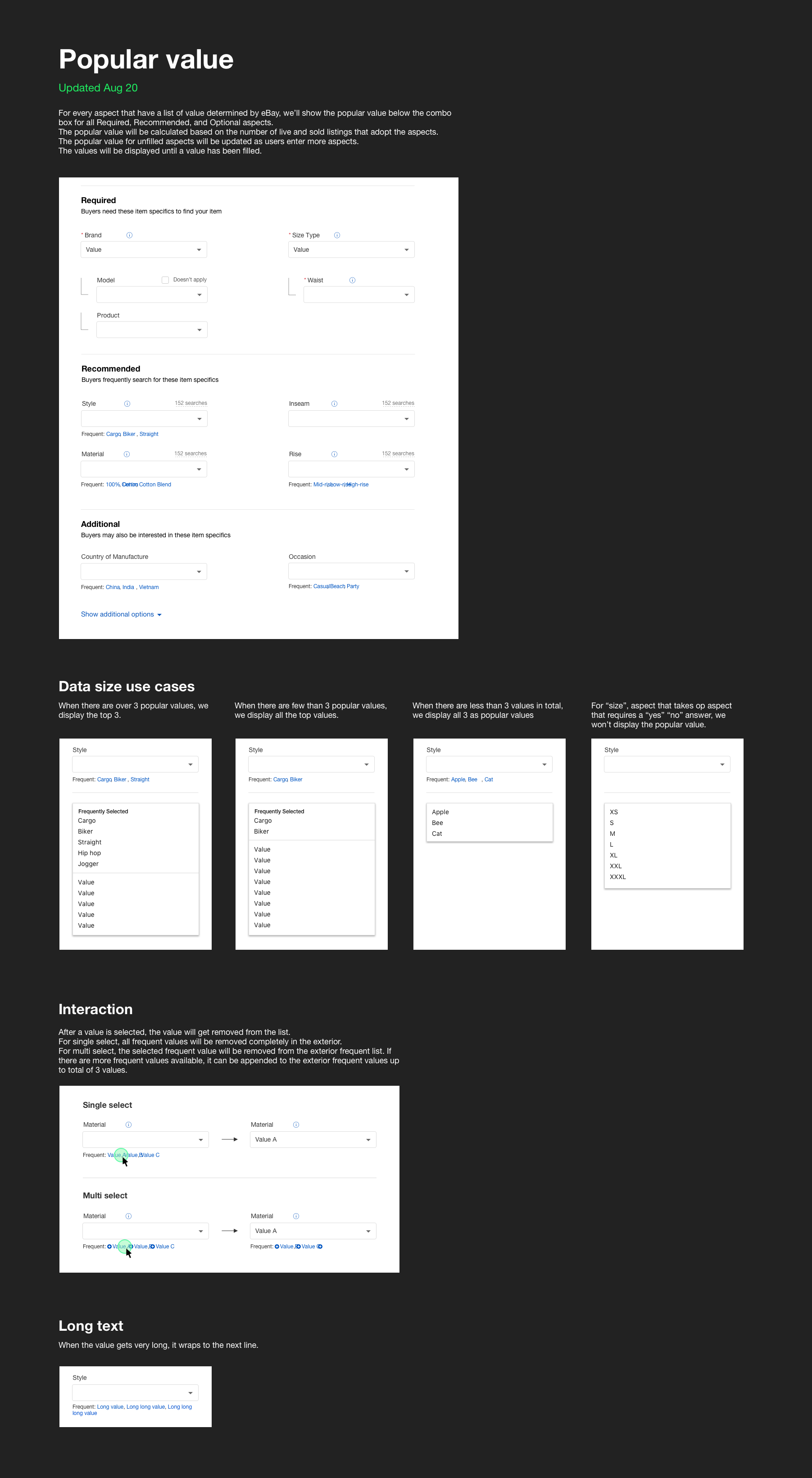
Once we decided on a design direction, I worked with 2 more designs to create the rest of UIs. This required tight collaboration and alignment across 4 different product and engineering teams, 5 platforms, 3 designers (including myself), and multiple other stakeholders including leadership, Marketing, Localization, and Legal.
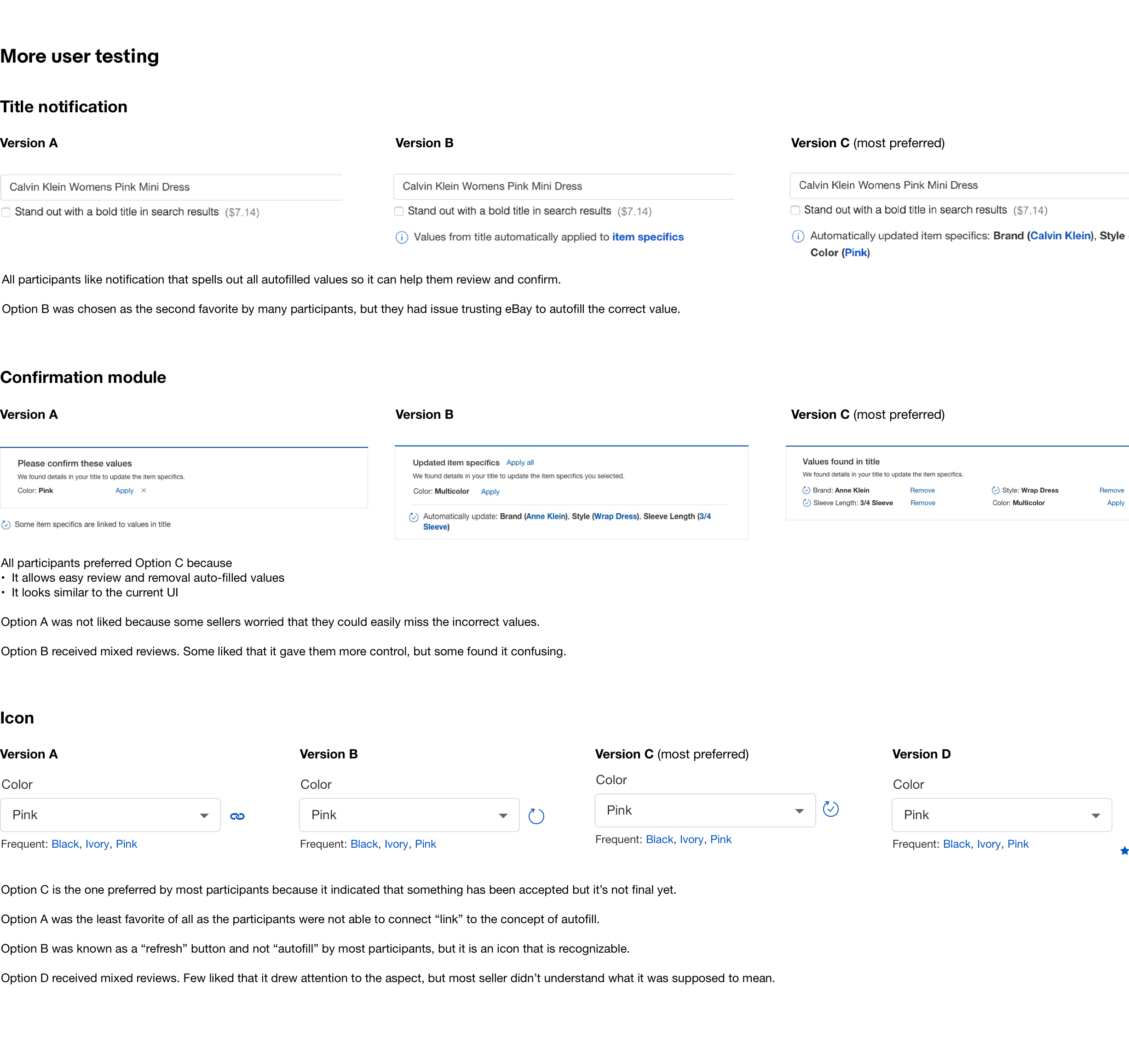
As we dived more into the project, we also learned more about the complication of the professional selling domain, and the wide range of use cases that could be effective, such as multi-quantity items, draft, template...etc. We eventually made the decision to limit the initial launches to a few cases. Different designs of the hypothesis were also made and tested to help us narrow down the best option.
Phase 1 of the project was successfully launched in September 2019 in the US, and eventually scaled to different markets such as Germany and Australia. It created an 18% lift in aspect completion rate and is considered as one of the top successful initiatives of the year.
Phase 1 of the project was successfully launched in September 2019 in the US, and eventually scaled to different markets such as Germany and Australia. It created an 18% lift in aspect completion rate and is considered as one of the top successful initiatives of the year. Phase 2 of the projects is currently in the process of being implemented and will be launched around April 2020.